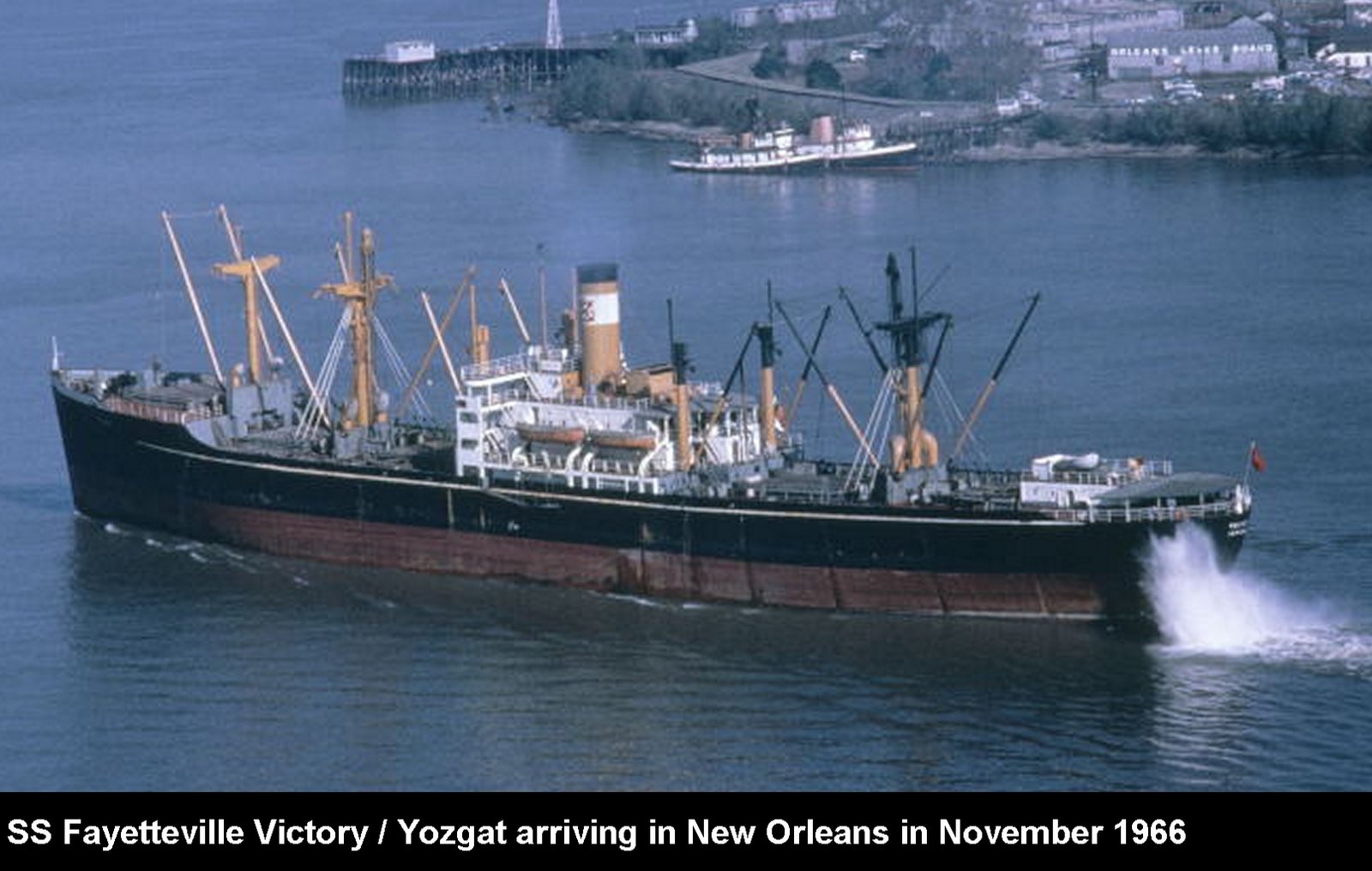
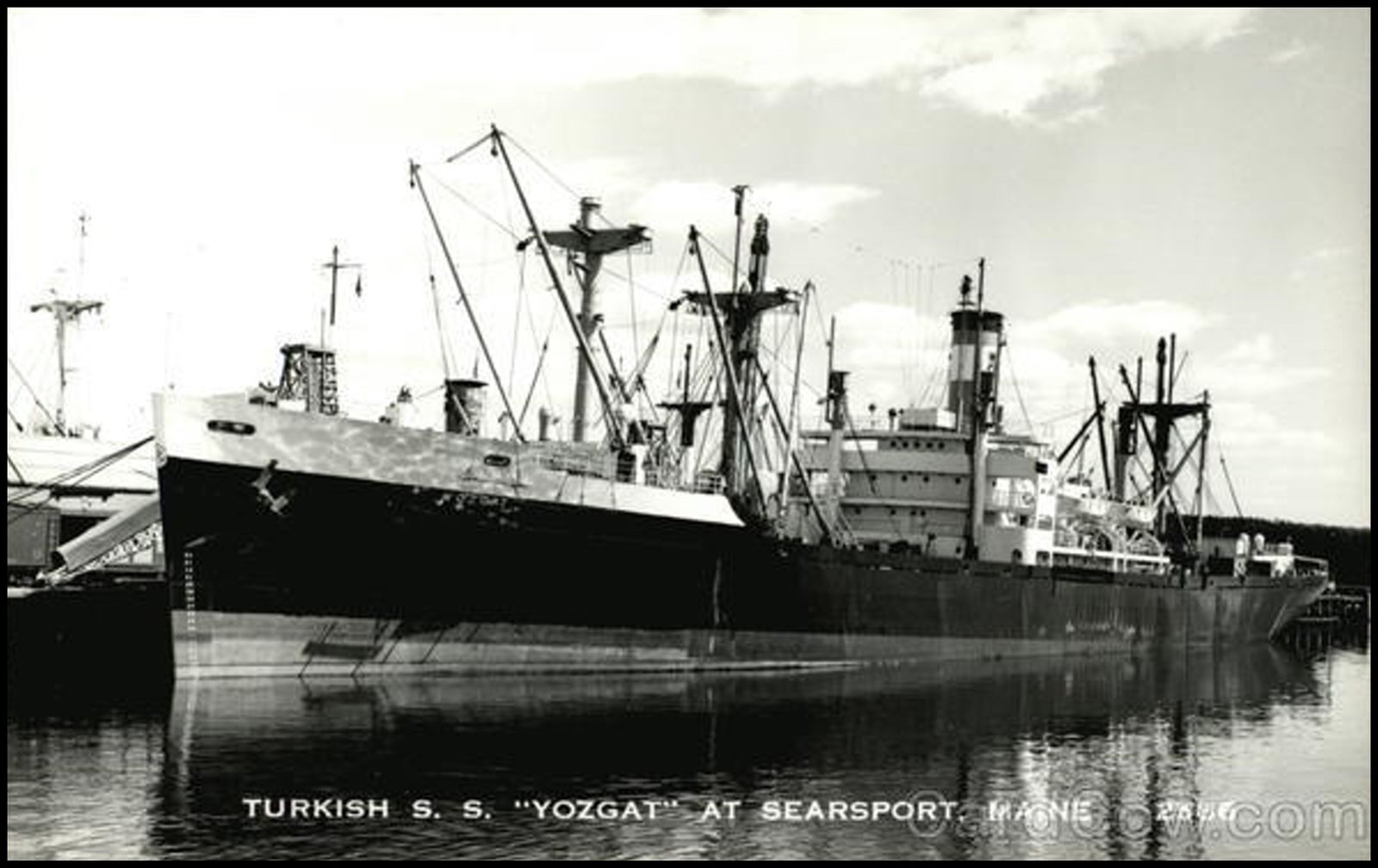
In simple terms, a Victory ship was an upgraded, faster, and stronger version of the famous "Liberty ship" used to carry supplies during World War II. The Victory ship was the "new and improved" model. It had a better design and, most importantly, a powerful steam turbine engine that allowed it to travel at 15–17 knots. This extra speed was crucial because it meant Victory ships could often outrun German U-boats and keep up with faster military convoys across the Atlantic and Pacific.
Ships in the Victory class were named after Allied nations and United States cities. To have a ship named after a specific town, the community typically had to demonstrate exceptional support for the war effort, and in return, the Maritime Commission would christen a vessel in the town's honor.
The keel for SS Fayetteville Victory was laid on February 19, 1945 in a Baltimore Shipyard. The ship was delivered just as the war in Europe was ending (V-E Day was May 8, 1945), so it served primarily bringing troops home (Operation Magic Carpet) after the war. After its military service, it was sold and operated commercially under foreign flags before eventually being scrapped.